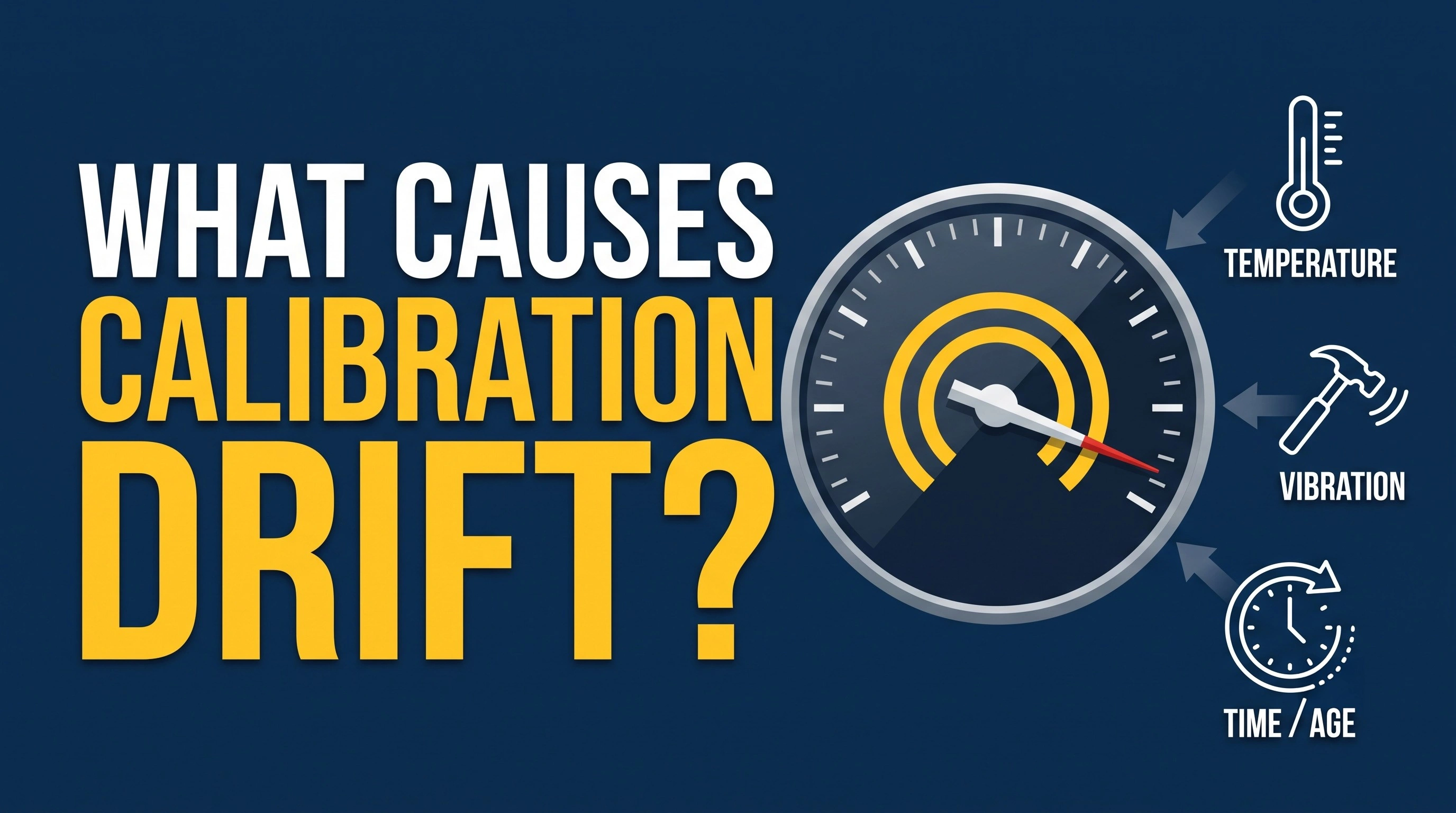

What Causes Calibration Drift?
Calibration is not a one-time event. Even the highest-quality measurement instruments gradually change over time, causing their readings to drift away from their original calibration. This phenomenon, known as calibration drift, is one of the leading causes of inaccurate measurements in industries ranging from solar energy and aerospace to fire testing and research laboratories.
Understanding what causes calibration drift—and how to minimize it—can help extend the life of your instruments, improve measurement confidence, and reduce costly errors.
What Is Calibration Drift?
Calibration drift refers to the gradual change in an instrument’s measurement accuracy over time. As components age or operating conditions change, the sensor’s output may no longer accurately represent the quantity being measured.
Drift is typically slow and difficult to detect without regular recalibration. In many cases, an instrument may appear to function normally while producing measurements that are increasingly inaccurate.
This is why routine calibration is essential for maintaining confidence in measurement data.
Why Does Calibration Drift Matter?
Even small measurement errors can have significant consequences.
Calibration drift can lead to:
- Incorrect research data
- Reduced product quality
- Poor process control
- Lower solar energy performance estimates
- Failed compliance audits
- Increased measurement uncertainty
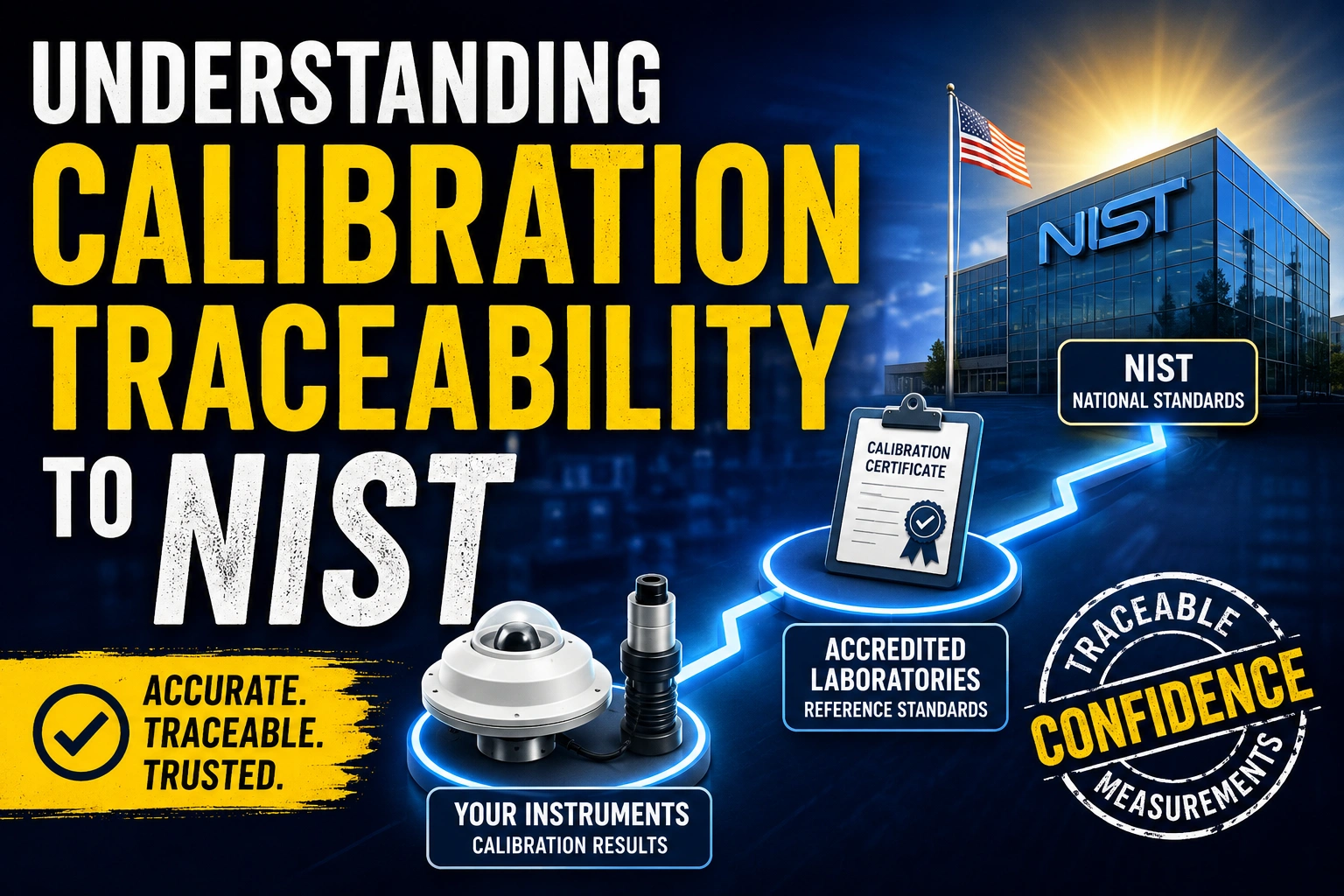
For organizations operating under ISO/IEC 17025, monitoring and correcting calibration drift is an important part of maintaining measurement traceability and quality. Learn more in our guide to Understanding Calibration Traceability to NIST and Calibration Fundamentals: Accuracy, Traceability, and Measurement Uncertainty.
Common Causes of Calibration Drift
1. Sensor Aging
Every sensor experiences natural aging.
Materials expand, contract, and slowly degrade over years of operation. Electronic components can also change characteristics as they age, altering the instrument’s response.
Even when instruments are carefully maintained, aging is unavoidable.
2. Exposure to Extreme Temperatures
Repeated exposure to high temperatures can permanently affect sensor performance.
Thermal cycling may cause:
- Expansion and contraction of materials
- Changes in sensor sensitivity
- Mechanical stress
- Component fatigue
Heat flux sensors operating in furnaces, fire testing facilities, or aerospace environments are especially susceptible.
For more on this topic, see Common Errors in High-Temperature Measurements and How Temperature Gradients Affect Thermal Measurements.
3. Environmental Contamination
Dust, soot, moisture, oils, and chemical residues can all affect measurement accuracy.
For radiometers and pyranometers, contamination on the sensing surface reduces the amount of radiation reaching the detector, resulting in lower readings.
Routine cleaning and proper storage can significantly reduce these effects.
4. Mechanical Shock and Vibration
Dropping an instrument—or even repeated vibration during transportation—can alter internal alignment and damage sensitive components.
Potential sources include:
- Shipping
- Field installation
- Industrial machinery
- Portable testing equipment
After significant impact, recalibration is recommended before returning the instrument to service.
5. Exposure to UV Radiation
Outdoor solar instruments are continuously exposed to ultraviolet radiation.
Over time, UV exposure may affect:
- Protective coatings
- Optical domes
- Adhesives
- Seal materials
These gradual changes can influence measurement accuracy and contribute to long-term drift.
6. Moisture and Humidity
Water intrusion is another common source of calibration drift.
Moisture can:
- Damage insulation
- Corrode electrical connections
- Alter sensor response
- Affect thermal conductivity
Storing sensors in a controlled environment helps minimize these risks. Our article on How to Store Heat Flux Sensors Properly provides practical recommendations.
7. Electrical Component Changes
Many measurement instruments rely on precision electronics.
Over time:
- Resistors change value
- Amplifiers drift
- Reference voltages shift
- Connectors develop higher resistance
Although these changes are often small, they can significantly affect highly sensitive instruments.
8. Improper Handling
Handling mistakes remain one of the most preventable causes of drift.
Common examples include:
- Touching optical surfaces
- Pulling on sensor cables
- Improper storage
- Using incorrect cleaning methods
- Exceeding operating temperature limits
Following manufacturer handling guidelines can greatly extend sensor life.
9. Repeated Thermal Cycling
Frequently heating and cooling an instrument places stress on its internal materials.
Over hundreds or thousands of cycles, these stresses accumulate, potentially changing calibration characteristics.
High-temperature heat flux sensors are particularly vulnerable to this type of wear.
10. Normal Wear Over Time
Even under ideal operating conditions, every measurement instrument will eventually drift.
This is why manufacturers and accredited laboratories recommend periodic recalibration based on:
- Operating hours
- Environmental conditions
- Application criticality
- Manufacturer recommendations
Calibration isn’t about fixing broken instruments—it’s about verifying that accurate measurements continue over time.
How to Detect Calibration Drift
Drift is rarely obvious during normal operation.
Warning signs include:
- Measurements consistently higher or lower than expected
- Increased disagreement between multiple sensors
- Unexpected changes in historical data
- Process results that no longer match previous trends
- Calibration certificates showing larger adjustments over time
Routine calibration is often the only reliable way to detect gradual drift before it affects critical measurements.
How to Minimize Calibration Drift
While drift cannot be eliminated entirely, it can be significantly reduced.
Follow Recommended Calibration Intervals
Routine calibration identifies drift before it becomes significant.
Our Pyranometer Calibration and Radiometer Calibration Services explain how regular calibration helps maintain measurement confidence.
Store Instruments Properly
Protect sensors from:
- Dust
- Moisture
- Temperature extremes
- Mechanical damage
See How to Store Heat Flux Sensors Properly for best practices.
Handle Sensors Carefully
Avoid:
- Dropping instruments
- Pulling cables
- Touching sensing surfaces
- Using harsh cleaning chemicals
Small handling mistakes often lead to long-term performance issues.
Keep Instruments Clean
Contaminated sensing surfaces can mimic calibration drift.
Regular inspection and cleaning help ensure measurements remain accurate between calibration intervals.
Work with an ISO/IEC 17025 Accredited Laboratory
Accredited laboratories use traceable reference standards and documented procedures to accurately identify and correct drift.
If you’re unsure why accreditation matters, read ISO 17025 vs. ISO 9001: Understanding Calibration Standards.
Can Calibration Drift Be Corrected?
Yes.
In most cases, drift is corrected through recalibration.
During calibration, the instrument’s response is compared against traceable reference standards, and updated calibration factors are determined to restore measurement accuracy.
However, if drift is caused by physical damage or excessive aging, repair or replacement may be necessary.
Final Thoughts
Calibration drift is a natural part of every measurement instrument’s lifecycle. Whether caused by aging, environmental exposure, mechanical stress, or normal wear, drift gradually reduces measurement accuracy over time.
Fortunately, drift can be effectively managed through proper handling, controlled storage, routine maintenance, and regular calibration performed by an accredited laboratory.
By understanding the causes of calibration drift and taking proactive steps to minimize its effects, organizations can improve data quality, support regulatory compliance, and extend the service life of valuable measurement equipment.