
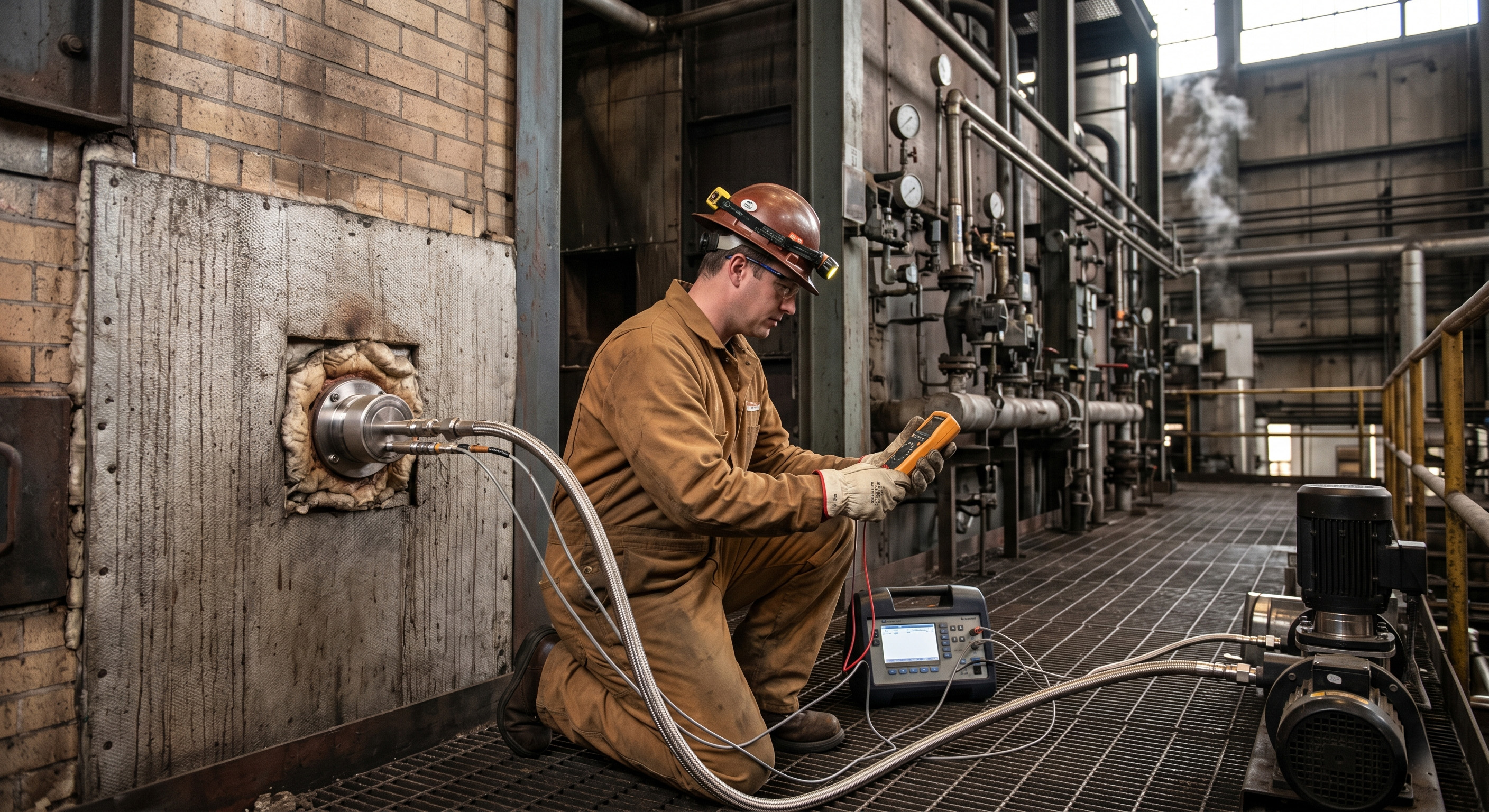
Heat Flux Measurement in Industrial Furnaces and Boilers: A Best Practice Guide

Heat Flux Measurement in Industrial Furnaces and Boilers: A Best Practice Guide
In heavy industries, power generation, and chemical processing, industrial furnaces and boilers operate under extreme thermal conditions. For plant managers and engineers, maximizing thermal efficiency while preventing catastrophic equipment failure is a daily balancing act. The key to achieving this balance lies in accurate heat flux measurement.
Measuring the rate of heat transfer (heat flux) to boiler tubes, furnace walls, and process loads allows operators to optimize fuel consumption, monitor slag buildup, and prevent overheating. However, capturing reliable data in these harsh environments is notoriously difficult.
In this best practice guide, we will explore the critical steps for successful heat flux measurement in industrial furnaces and boilers, from selecting the right sensor to maintaining its accuracy over time.
1. Understand the Challenges of the Environment
Industrial furnaces and boilers present some of the most hostile environments for sensitive instrumentation. Sensors must withstand intense radiant heat, corrosive gases, particulate matter (like ash and soot), and extreme temperature gradients.
Failing to account for these environmental factors can lead to rapid sensor degradation or highly skewed data. In fact, ignoring environmental variables is one of the leading causes of common errors in high-temperature measurements. Before installing any instrumentation, map out the expected peak temperatures, convective heat loads, and potential chemical exposures in your specific application.
2. Choose the Right Heat Flux Sensor Technology
Not all heat flux sensors are built for the intense thermal radiation of a boiler or furnace. When selecting a sensor, engineers typically choose between two primary technologies: Gardon gauges and Schmidt-Boelter sensors.
- Gardon Gauges: Highly durable and capable of measuring very high heat flux levels, making them a popular choice for rugged industrial environments.
- Schmidt-Boelter Sensors: Offer higher sensitivity and a faster response time, which is ideal for environments where heat flux fluctuates rapidly.
Understanding the specific differences in construction and output is crucial for your application. To determine the best fit for your facility, read our detailed breakdown: Schmidt-Boelter vs. Gardon Gauge Heat Flux Sensors: Which Should You Use?
3. Implement Water Cooling
Because standard sensors would melt or fail under the sustained temperatures of a furnace, industrial heat flux sensors are almost always equipped with a water-cooling jacket.
Best Practices for Water Cooling:
- Maintain Constant Flow: Ensure a continuous, uninterrupted flow of cooling water. Even a momentary lapse in flow can result in immediate thermal damage to the sensor face.
- Monitor Water Temperature: The temperature of the cooling water entering and exiting the sensor should be monitored to ensure the cooling system is adequately removing heat.
- Prevent Condensation: If the cooling water is too cold relative to the surrounding environment outside the furnace, condensation can form on the sensor, potentially skewing readings or causing electrical shorts.
Because these water-cooled housings affect the thermal dynamics of the sensor, they require specialized calibration setups. Learn more about the intricacies of water-cooled heat flux sensor calibration here.
4. Account for Slag and Ash Buildup
In coal-fired boilers and certain industrial furnaces, ash and slag inevitably build up on the boiler walls—and on the face of your sensors. This buildup acts as an insulator, artificially lowering the heat flux reading and giving operators a false sense of security regarding internal temperatures.
Mitigation strategies include:
- Regular Cleaning Schedules: Implement a strict routine to clean the sensor face based on the fuel type and known buildup rates of your furnace.
- Air Purge Systems: Some sensor installations utilize a continuous air purge across the sensor face to deflect particulate matter before it can settle.
- Data Trending: Monitor your heat flux data over time. A slow, steady decline in heat flux readings while furnace operating conditions remain constant is a strong indicator of slag buildup on the sensor face.
5. Prioritize Routine Maintenance and Calibration
Even with robust water cooling and air purges, the extreme conditions inside a boiler will inevitably cause sensor drift over time. The absorptive coating on the sensor face may degrade, or the internal thermocouples may experience metallurgical changes due to the heat.
To ensure your readings remain actionable and safe, you must know how to maintain the accuracy of your heat flux sensors throughout their operational lifespan.
Routine calibration is not optional in these high-stakes environments—it is a critical safety and efficiency requirement. Sensors should be removed and calibrated against a primary standard using an accredited blackbody radiation source.
Need Expert Calibration Support?
At ISO-CAL North America, we understand the rigorous demands placed on industrial thermal sensors. Our ISO/IEC 17025 accredited laboratory offers comprehensive radiometer calibration services, ensuring your heat flux sensors perform accurately when you need them most.
Don’t let sensor drift compromise your boiler’s efficiency or safety. Contact us today to schedule your next heat flux sensor calibration.